My good friend and fellow life traveler, Madalyn, posted this wonderful piece recently and I decided to reblog. The only thing I would likely add is to allow children to grow up without being taught what to believe, but how to think. Question everything, listen to the opinions, and make up your own mind. Never teach them exclusive doctrines of any religion, but teach them empathy for all, and to follow the Golden Rule.
NATIONAL HALL OF INJUSTICE
16 Mar 2015 8 Comments
in Acts of the Ignoble, Intellectual Dishonesty Tags: bigotry, Hall of Fame, Hall of the Infamous, human-rights, Legion of Dishonor Award, Mind Control
After reading article after article for the past 3.5 decades that demonstrate the nations slide away from tolerance and justice and toward a culture of bigotry and corporate dominance–mainly religious bigotry disguised as “religious freedom” and corporate dominance promoted as “free market capitalism” and “supply side economics”–I have decided create a hall of shame, concentrating on words and acts bigotry and deceit.
The National Hall of Injustice is an ongoing list of elected officials and political appointees such as judges and department heads, as well as outspoken citizens, clerics, and corporate personalities. Nominees who are approved for induction will receive the metaphorical Legion of Dishonor Award. Anyone may make a nomination and/or suggest changes or additions to the structure of the Hall, the definitions, or the Rules of Induction.
I invite anyone interested to be on the Board of Inductions. Necessarily, this board will consist of no more than 5 members, including myself.
Definitions: Injustice – Unfair treatment : a situation in which the rights of a person or a group of people are ignored or reduced. Justice – Fairness (I am taking a Rawlsian original position on the definition of fairness) Social justice is defined by the New Oxford American Dictionary as “justice in terms of the distribution of wealth*, opportunities, and privileges within a society.”
* To clarify, “distribution of wealth” does not mean equal distribution, but equitable distribution. I am currently writing an article on the meaning of social justice and how the U.S. might look were it a truly just nation.
Bigotry is a state of mind where a person by actions or words obstinately, irrationally, unfairly or intolerantly dislikes or treats other people, ideas, etc. Other examples include degrading a person’s natural, physical appearance, personal beliefs, race, religion, national gender, disability, sexual orientation, socioeconomic status, or other group characteristics. (I use the Wikipedia definition because I like it.) 😀
Tentative rules for induction: 1. Nominee’s word(s) and/or action(s) must meet the above definition of injustice and/or bigotry (above). 2. Nominations must be accompanied by a verifiable, objective source (video, original, news agency, professional paper, blog, etc.). Preferably an image of the person(s) would be included as well. Information may be added or deleted over time.
More examples of bigotry and/or injustice: A. Personal attacks – includes verbal degradation of a person or group rather than making an objective argument against their actions or ideas. Personal attacks are used in politics on a daily bases as a means of thought-engineering/mind-control (propaganda) for the purpose of molding the public’s opinion of people and their ideas. Those who use this tactic are particularly dishonorable. B. Advocating injustice – Advocating or acting against another person or group (e.g., advocating and/or legislating to deny a segment of society the right to pursue happiness through marriage; advocating or acting against another religion or people of no religion without a secular, just cause; advocating and/or making laws for government control over the reproductive decisions of women and their doctors; advocating the propagation of a religion via law; advocating government sponsorship of a religion; advocating supply-side economics (redistribution of the wealth of the middle class to the already wealthy and the demise of labor unions). Currently, since I am the only member of the board of inductions, I will personally install the following personalities. Removal of names from the Hall may be suggested by anyone, but determined by the argument and/or evidence and decided upon by the board of inductions.
The National Hall of Injustice
 U.S. Supreme Court Chief Justice John G. Roberts Jr. wins the Legion of Dishonor Award for his outstanding display of injustice in leading the Majority in effectively striking down the heart of the Voting Rights Act of 1965. Although Roberts may have been acting in accordance with his true belief that racial and voting discrimination had ended, he certainly should have known better. It has been invigorated in conservative held States. Secondly, Roberts led the majority decision in Citizens United v. Federal Election Commission which effectively opened the door for massive corporate, political influence in voting and legislative bribery contrary to the ideals set up by the Founders and to the detriment of the Republic.
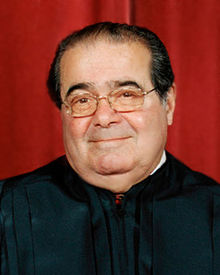
United States Supreme Court Justice Antonin Scalia earns the Legion of Dishonor Award for his part in effectively striking down the Voting Rights Act of 1965 and joining the majority in voting with the majority in Citizens United v. Federal Election Commission, which resulted in greater corporate influence over federal legislation and elections, State and federal, resulting in a further the dismantling of the Republic.
 United States Supreme Court Justice Anthony M. Kennedy joins the Legion of Dishonor for his part in effectively striking down the Voting Rights Act of 1965 and joining the majority in voting with the majority in Citizens United v. Federal Election Commission, which resulted in greater corporate influence over federal legislation and elections, State and federal, resulting in a further the dismantling of the Republic.
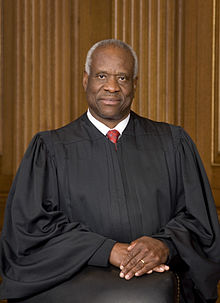 United States Supreme Court Justice Clarence Thomas receives the Legion of Dishonor for joining the majority in effectively striking down the Voting Rights Act of 1965 and joining the majority in voting with the majority in Citizens United v. Federal Election Commission, which resulted in greater corporate influence over federal legislation and elections, State and federal, resulting in a further the dismantling of the Republic.
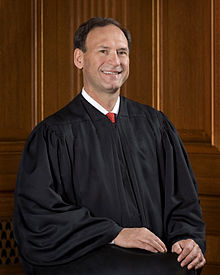
 United States Supreme Court Justice Samuel A. Alito Jr. receives the Legion of Dishonor for joining the majority in effectively striking down the Voting Rights Act of 1965 and joining the majority in voting with the majority in Citizens United v. Federal Election Commission, which resulted in greater corporate influence over federal legislation and elections, State and federal, resulting in a further the dismantling of the Republic.
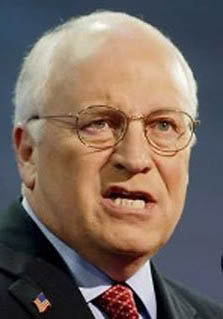 Richard Bruce “Dick” Cheney, 46th Vice President of the United States is today’s recipient of the Legion of Dishonor Award and hereby inducted into the NATIONAL HALL OF INJUSTICE for treason against the United States by exposing a NOC (Non-Official-Cover/deep cover) CIA agent, Valerie Plame Wilson–specializing in anti-WMD operations–and her front organization, Brewster-Jennings. Her outing, in turn, exposed all agents under that front organization as well as their foreign contacts. Plame was operations chief at the Joint Task Force on Iraq of the Counterproliferation Division of the CIA’s clandestine operations directorate. The CIA’s damage assessment, to this day, remains Top Secret. While no direct evidence has surfaced in relation to this crime, it is clear to the Board of Inductions that he is guilty beyond a reasonable doubt.
Plame’s CIA operation was compromised by a leak from Cheney’s office in revenge against Plame’s husband, Joe Wilson, for his op-ed in the New York Times that refuted the administration’s claim that Iraq was attempting to buy “yellowcake” (the base material for higher-grade nuclear enrichment) from Niger. A subsequent criminal investigation was obstructed by Lewis “Scooter” Libby, Cheney’s top advisor and firewall. Libby subsequently fell on his sword, was convicted of obstruction of justice, making false statements, and perjury. He was sentenced to 30 months in prison. G.W. Bush commuted the prison sentence.
Cheney deserves the Legion of Dishonor Award as well for his false statements and critical influence of President G.W. Bush to give unconfirmed, disputed, and false information to Congress in order to obtain the Authorization for Use of Military Force Against Iraq Resolution of 2002. This resolution gave the administration congressional permission to preemptively invade the sovereign nation of Iraq.
Cheney also was instrumental in the creation of America’s Gulag Archipelago of Blacksite Torture camps that used methods of enhanced interrogation (torture) in violation of international law, to which the U.S. was/is bound.
 Alabama Chief Justice Roy Moore is today’s winner of the Legion of Dishonor Award for his open defiance of Constitutional law; specifically for his history of disregard for, or his ignorance of the intent of the Establishment Clause of the 1st Amendment to the Constitution of the United States, and of the Equal Protection Clause of the 14th Amendment. He is hereby inducted into the National Hall of Injustice.
Recently, Moore insisted that biblical law supersedes the Constitution, and to that end he issued an illegal order—demanding that local magistrates not issue marriage licenses to same-gender couples—in an effort to countermand the Supreme Court of the United States. For a judge to declare that his ancient, religious views override the Constitution and to act on that belief is, in the opinion of this Board of Inductions, judicial treason, punishable by firing and disbarment. He is a disgrace to the bench.
More Inductees coming as time allows
— Max T. Furr is author of The Empathy Imperative, a philosophical novel written in the spirit of the BBC/WGBH Boston production, God On Trial, a play written by Frank Cottrell Boyce, based on an event told by Elie Wiesel in his book, The Trial of God.
Is Yahweh’s justice and mercy something other than what humans believe justice to be? Have a seat in the Court of Answers.
REWRITE THE CONSTITUTION: A Grass-Root Constitutional Convention (Part One)
16 Mar 2015 Leave a comment
in Constitutional Amendments, U.S. Constitution Tags: Amendments, Constitution of the U.S., First Amendment, fourteenth amendment, second amendment, The Constitution of the United States
This challenge will appear in two posts. Part one will consist only of the main body of the Constitution and amendments 11 through 27. Part two will consist of the Bill of Rights (the first 10 Amendments). I’m sure many folks already know what they would amend, and I am fairly certain the Bill of Rights will get the most responses.
After participating in many fractious debates involving specifics of the Constitution and having folks misinterpret its purpose and the intent behind its words, I’m offering a chance to amend the document and clarify what you believe to be the meaning (intent) of any clause, article, or entire amendment–or just toss the clause, article, or amendment, or even the entire Constitution and build your own if you think we need one.
* I invite all readers to tweet or otherwise share this. I’d like to see a lot of participation.
— THE CONSTITUTION OF THE UNITED STATES OF AMERICA —
PREAMBLE
We the People of the United States, in Order to form a more perfect Union, establish Justice, insure domestic Tranquility, provide for the common defence, promote the general Welfare, and secure the Blessings of Liberty to ourselves and our Posterity, do ordain and establish this Constitution for the United States of America.
ARTICLE I
SECTION. 1. All legislative Powers herein granted shall be vested in a Congress of the United States, which shall consist of a Senate and House of Representatives.
SECTION. 2. The House of Representatives shall be composed of Members chosen every second Year by the People of the several States, and the Electors in each State shall have the Qualifications requisite for Electors of the most numerous Branch of the State Legislature.
No Person shall be a Representative who shall not have attained to the Age of twenty five Years, and been seven Years a Citizen of the United States, and who shall not, when elected, be an Inhabitant of that State in which he shall be chosen.
Representatives and direct Taxes shall be apportioned among the several States which may be included within this Union, according to their respective Numbers, which shall be determined by adding to the whole Number of free Persons, including those bound to Service for a Term of Years, and excluding Indians not taxed, three fifths of all other Persons.The actual Enumeration shall be made within three Years after the first Meeting of the Congress of the United States, and within every subsequent Term of ten Years, in such Manner as they shall by Law direct.The number of Representatives shall not exceed one for every thirty Thousand, but each State shall have at Least one Representative; and until such enumeration shall be made, the State of New Hampshire shall be entitled to chuse three, Massachusetts eight, Rhode-Island and Providence Plantations one, Connecticut five, New-York six, New Jersey four, Pennsylvania eight, Delaware one, Maryland six, Virginia ten, North Carolina five, South Carolina five, and Georgia three.
When vacancies happen in the Representation from any State, the Executive Authority thereof shall issue Writs of Election to fill such Vacancies.
The House of Representatives shall chuse their Speaker and other Officers;and shall have the sole Power of Impeachment.
SECTION. 3. The Senate of the United States shall be composed of two Senators from each State, chosen by the Legislature thereof, for six Years; and each Senator shall have one Vote.
Immediately after they shall be assembled in Consequence of the first Election, they shall be divided as equally as may be into three Classes. The Seats of the Senators of the first Class shall be vacated at the Expiration of the second Year, of the second Class at the Expiration of the fourth Year, and of the third Class at the Expiration of the sixth Year, so that one third may be chosen every second Year;and if Vacancies happen by Resignation, or otherwise, during the Recess of the Legislature of any State, the Executive thereof may make temporary Appointments until the next Meeting of the Legislature, which shall then fill such Vacancies.
No Person shall be a Senator who shall not have attained to the Age of thirty Years, and been nine Years a Citizen of the United States, and who shall not, when elected, be an Inhabitant of that State for which he shall be chosen.
The Vice President of the United States shall be President of the Senate, but shall have no Vote, unless they be equally divided.
The Senate shall chuse their other Officers, and also a President pro tempore, in the Absence of the Vice President, or when he shall exercise the Office of President of the United States.
The Senate shall have the sole Power to try all Impeachments. When sitting for that Purpose, they shall be on Oath or Affirmation. When the President of the United States is tried, the Chief Justice shall preside: And no Person shall be convicted without the Concurrence of two thirds of the Members present.
Judgment in Cases of Impeachment shall not extend further than to removal from Office, and disqualification to hold and enjoy any Office of honor, Trust or Profit under the United States: but the Party convicted shall nevertheless be liable and subject to Indictment, Trial, Judgment and Punishment, according to Law.
SECTION. 4. The Times, Places and Manner of holding Elections for Senators and Representatives, shall be prescribed in each State by the Legislature thereof; but the Congress may at any time by Law make or alter such Regulations, except as to the Places of chusing Senators.
The Congress shall assemble at least once in every Year, and such Meeting shall be on the first Monday in December, unless they shall by Law appoint a different Day.
SECTION. 5. Each House shall be the Judge of the Elections, Returns and Qualifications of its own Members,and a Majority of each shall constitute a Quorum to do Business; but a smaller Number may adjourn from day to day, and may be authorized to compel the Attendance of absent Members, in such Manner, and under such Penalties as each House may provide.
Each House may determine the Rules of its Proceedings, punish its Members for disorderly Behaviour, and, with the Concurrence of two thirds, expel a Member.
Each House shall keep a Journal of its Proceedings, and from time to time publish the same, excepting such Parts as may in their Judgment require Secrecy; and the Yeas and Nays of the Members of either House on any question shall, at the Desire of one fifth of those Present, be entered on the Journal.
Neither House, during the Session of Congress, shall, without the Consent of the other, adjourn for more than three days, nor to any other Place than that in which the two Houses shall be sitting.
SECTION. 6. The Senators and Representatives shall receive a Compensation for their Services, to be ascertained by Law, and paid out of the Treasury of the United States.They shall in all Cases, except Treason, Felony and Breach of the Peace, be privileged from Arrest during their Attendance at the Session of their respective Houses, and in going to and returning from the same; and for any Speech or Debate in either House, they shall not be questioned in any other Place.
No Senator or Representative shall, during the Time for which he was elected, be appointed to any civil Office under the Authority of the United States, which shall have been created, or the Emoluments whereof shall have been increased during such time; and no Person holding any Office under the United States, shall be a Member of either House during his Continuance in Office.
SECTION. 7. All Bills for raising Revenue shall originate in the House of Representatives; but the Senate may propose or concur with Amendments as on other Bills.
Every Bill which shall have passed the House of Representatives and the Senate, shall, before it become a Law, be presented to the President of the United States; If he approve he shall sign it, but if not he shall return it, with his Objections to that House in which it shall have originated, who shall enter the Objections at large on their Journal, and proceed to reconsider it. If after such Reconsideration two thirds of that House shall agree to pass the Bill, it shall be sent, together with the Objections, to the other House, by which it shall likewise be reconsidered, and if approved by two thirds of that House, it shall become a Law. But in all such Cases the Votes of both Houses shall be determined by Yeas and Nays, and the Names of the Persons voting for and against the Bill shall be entered on the Journal of each House respectively. If any Bill shall not be returned by the President within ten Days (Sundays excepted) after it shall have been presented to him, the Same shall be a Law, in like Manner as if he had signed it, unless the Congress by their Adjournment prevent its Return, in which Case it shall not be a Law.
Every Order, Resolution, or Vote to which the Concurrence of the Senate and House of Representatives may be necessary (except on a question of Adjournment) shall be presented to the President of the United States; and before the Same shall take Effect, shall be approved by him, or being disapproved by him, shall be repassed by two thirds of the Senate and House of Representatives, according to the Rules and Limitations prescribed in the Case of a Bill.
SECTION. 8. The Congress shall have Power To lay and collect Taxes, Duties, Imposts and Excises, to pay the Debts and provide for the common Defence and general Welfare of the United States; but all Duties, Imposts and Excises shall be uniform throughout the United States;
To borrow Money on the credit of the United States;
To regulate Commerce with foreign Nations, and among the several States, and with the Indian Tribes;
To establish an uniform Rule of Naturalization, and uniform Laws on the subject of Bankruptcies throughout the United States;
To coin Money, regulate the Value thereof, and of foreign Coin, and fix the Standard of Weights and Measures;
To provide for the Punishment of counterfeiting the Securities and current Coin of the United States;
To establish Post Offices and post Roads;
To promote the Progress of Science and useful Arts, by securing for limited Times to Authors and Inventors the exclusive Right to their respective Writings and Discoveries;
To constitute Tribunals inferior to the supreme Court;
To define and punish Piracies and Felonies committed on the high Seas, and Offenses against the Law of Nations;
To declare War, grant Letters of Marque and Reprisal, and make Rules concerning Captures on Land and Water;
To raise and support Armies, but no Appropriation of Money to that Use shall be for a longer Term than two Years;
To provide and maintain a Navy; To make Rules for the Government and Regulation of the land and naval Forces;
To provide for calling forth the Militia to execute the Laws of the Union, suppress Insurrections and repel Invasions;
To provide for organizing, arming, and disciplining, the Militia, and for governing such Part of them as may be employed in the Service of the United States, reserving to the States respectively, the Appointment of the Officers, and the Authority of training the Militia according to the discipline prescribed by Congress;
To exercise exclusive Legislation in all Cases whatsoever, over such District (not exceeding ten Miles square) as may, by Cession of particular States, and the Acceptance of Congress, become the Seat of the Government of the United States, and to exercise like Authority over all Places purchased by the Consent of the Legislature of the State in which the Same shall be, for the Erection of Forts, Magazines, Arsenals, dock-Yards and other needful Buildings;-And
To make all Laws which shall be necessary and proper for carrying into Execution the foregoing Powers, and all other Powers vested by this Constitution in the Government of the United States, or in any Department or Officer thereof.
SECTION. 9. The Migration or Importation of such Persons as any of the States now existing shall think proper to admit, shall not be prohibited by the Congress prior to the Year one thousand eight hundred and eight, but a Tax or duty may be imposed on such Importation, not exceeding ten dollars for each Person.
The Privilege of the Writ of Habeas Corpus shall not be suspended, unless when in Cases of Rebellion or Invasion the public Safety may require it.
No Bill of Attainder or ex post facto Law shall be passed.
No Capitation, or other direct, Tax shall be laid, unless in Proportion to the Census or Enumeration herein before directed to be taken.
No Tax or Duty shall be laid on Articles exported from any State.
No Preference shall be given by any Regulation of Commerce or Revenue to the Ports of one State over those of another: nor shall Vessels bound to, or from, one State, be obliged to enter, clear, or pay Duties in another.
No Money shall be drawn from the Treasury, but in Consequence of Appropriations made by Law; and a regular Statement and Account of the Receipts and Expenditures of all public Money shall be published from time to time.
No Title of Nobility shall be granted by the United States: And no Person holding any Office of Profit or Trust under them, shall, without the Consent of the Congress, accept of any present, Emolument, Office, or Title, of any kind whatever, from any King, Prince, or foreign State.
SECTION. 10. No State shall enter into any Treaty, Alliance, or Confederation; grant Letters of Marque and Reprisal; coin Money; emit Bills of Credit; make any Thing but gold and silver Coin a Tender in Payment of Debts; pass any Bill of Attainder, ex post facto Law, or Law impairing the Obligation of Contracts, or grant any Title of Nobility.
No State shall, without the Consent of the Congress, lay any Imposts or Duties on Imports or Exports, except what may be absolutely necessary for executing it’s inspection Laws: and the net Produce of all Duties and Imposts, laid by any State on Imports or Exports, shall be for the Use of the Treasury of the United States; and all such Laws shall be subject to the Revision and Controul of the Congress.
No State shall, without the Consent of Congress, lay any Duty of Tonnage, keep Troops, or Ships of War in time of Peace, enter into any Agreement or Compact with another State, or with a foreign Power, or engage in War, unless actually invaded, or in such imminent Danger as will not admit of delay.
ARTICLE II
SECTION. 1. The executive Power shall be vested in a President of the United States of America. He shall hold his Office during the Term of four Years, and, together with the Vice President, chosen for the same Term, be elected, as follows:
Each State shall appoint, in such Manner as the Legislature thereof may direct, a Number of Electors, equal to the whole Number of Senators and Representatives to which the State may be entitled in the Congress: but no Senator or Representative, or Person holding an Office of Trust or Profit under the United States, shall be appointed an Elector.
The Congress may determine the Time of chusing the Electors, and the Day on which they shall give their Votes; which Day shall be the same throughout the United States.
No Person except a natural born Citizen, or a Citizen of the United States, at the time of the Adoption of this Constitution, shall be eligible to the Office of President; neither shall any person be eligible to that Office who shall not have attained to the Age of thirty five Years, and been fourteen Years a Resident within the United States.
The President shall, at stated Times, receive for his Services, a Compensation, which shall neither be increased nor diminished during the Period for which he shall have been elected, and he shall not receive within that Period any other Emolument from the United States, or any of them.
Before he enter on the Execution of his Office, he shall take the following Oath or Affirmation:–“I do solemnly swear (or affirm) that I will faithfully execute the Office of President of the United States, and will to the best of my Ability, preserve, protect and defend the Constitution of the United States.”
SECTION. 2. The President shall be Commander in Chief of the Army and Navy of the United States, and of the Militia of the several States, when called into the actual Service of the United States; he may require the Opinion, in writing, of the principal Officer in each of the executive Departments, upon any Subject relating to the Duties of their respective Offices, and he shall have Power to grant Reprieves and Pardons for Offenses against the United States, except in Cases of Impeachment.
He shall have Power, by and with the Advice and Consent of the Senate, to make Treaties, provided two thirds of the Senators present concur; and he shall nominate, and by and with the Advice and Consent of the Senate, shall appoint Ambassadors, other public Ministers and Consuls, Judges of the supreme Court, and all other Officers of the United States, whose Appointments are not herein otherwise provided for, and which shall be established by Law: but the Congress may by Law vest the Appointment of such inferior Officers, as they think proper, in the President alone, in the Courts of Law, or in the Heads of Departments.
The President shall have Power to fill up all Vacancies that may happen during the Recess of the Senate, by granting Commissions which shall expire at the End of their next Session.
SECTION. 3. He shall from time to time give to the Congress Information of the State of the Union, and recommend to their Consideration such Measures as he shall judge necessary and expedient; he may, on extraordinary Occasions, convene both Houses, or either of them, and in Case of Disagreement between them, with Respect to the Time of Adjournment, he may adjourn them to such Time as he shall think proper; he shall receive Ambassadors and other public Ministers; he shall take Care that the Laws be faithfully executed, and shall Commission all the Officers of the United States.
SECTION. 4. The President, Vice President and all civil Officers of the United States, shall be removed from Office on Impeachment for, and Conviction of, Treason, Bribery, or other high Crimes and Misdemeanors.
ARTICLE III
SECTION. 1. The judicial Power of the United States, shall be vested in one supreme Court, and in such inferior Courts as the Congress may from time to time ordain and establish. The Judges, both of the supreme and inferior Courts, shall hold their Offices during good Behaviour, and shall, at stated Times, receive for their Services, a Compensation, which shall not be diminished during their Continuance in Office.
SECTION. 2. The judicial Power shall extend to all Cases, in Law and Equity, arising under this Constitution, the Laws of the United States, and Treaties made, or which shall be made, under their Authority;–to all Cases affecting Ambassadors, other public Ministers and Consuls;–to all Cases of admiralty and maritime Jurisdiction;–to Controversies to which the United States shall be a Party;–to Controversies between two or more States;–between a State and Citizens of another State;–between Citizens of different States;–between Citizens of the same State claiming Lands under Grants of different States, and between a State, or the Citizens thereof, and foreign States, Citizens or Subjects.
In all Cases affecting Ambassadors, other public Ministers and Consuls, and those in which a State shall be Party, the supreme Court shall have original Jurisdiction. In all the other Cases before mentioned, the supreme Court shall have appellate Jurisdiction, both as to Law and Fact, with such Exceptions, and under such Regulations as the Congress shall make.
The Trial of all Crimes, except in Cases of Impeachment; shall be by Jury; and such Trial shall be held in the State where the said Crimes shall have been committed; but when not committed within any State, the Trial shall be at such Place or Places as the Congress may by Law have directed.
SECTION. 3. Treason against the United States, shall consist only in levying War against them, or in adhering to their Enemies, giving them Aid and Comfort. No Person shall be convicted of Treason unless on the Testimony of two Witnesses to the same overt Act, or on Confession in open Court.
The Congress shall have Power to declare the Punishment of Treason, but no Attainder of Treason shall work Corruption of Blood, or Forfeiture except during the Life of the Person attainted.
ARTICLE IV
SECTION. 1. Full Faith and Credit shall be given in each State to the public Acts, Records, and judicial Proceedings of every other State. And the Congress may by general Laws prescribe the Manner in which such Acts, Records and Proceedings shall be proved, and the Effect thereof.
SECTION. 2. The Citizens of each State shall be entitled to all Privileges and Immunities of Citizens in the several States.
A Person charged in any State with Treason, Felony, or other Crime, who shall flee from Justice, and be found in another State, shall on Demand of the executive Authority of the State from which he fled, be delivered up, to be removed to the State having Jurisdiction of the Crime.
SECTION. 3. New States may be admitted by the Congress into this Union; but no new State shall be formed or erected within the Jurisdiction of any other State; nor any State be formed by the Junction of two or more States, or Parts of States, without the Consent of the Legislatures of the States concerned as well as of the Congress.
The Congress shall have Power to dispose of and make all needful Rules and Regulations respecting the Territory or other Property belonging to the United States; and nothing in this Constitution shall be so construed as to Prejudice any Claims of the United States, or of any particular State.
SECTION. 4. The United States shall guarantee to every State in this Union a Republican Form of Government, and shall protect each of them against Invasion; and on Application of the Legislature, or of the Executive (when the Legislature cannot be convened) against domestic Violence.
ARTICLE V
The Congress, whenever two thirds of both Houses shall deem it necessary, shall propose Amendments to this Constitution, or, on the Application of the Legislatures of two thirds of the several States, shall call a Convention for proposing Amendments, which, in either Case, shall be valid to all Intents and Purposes, as Part of this Constitution, when ratified by the Legislatures of three fourths of the several States, or by Conventions in three fourths thereof, as the one or the other Mode of Ratification may be proposed by the Congress; Provided that no Amendment which may be made prior to the Year One thousand eight hundred and eight shall in any Manner affect the first and fourth Clauses in the Ninth Section of the first Article; and that no State, without its Consent, shall be deprived of its equal Suffrage in the Senate.
ARTICLE VI
All Debts contracted and Engagements entered into, before the Adoption of this Constitution, shall be as valid against the United States under this Constitution, as under the Confederation.
This Constitution, and the Laws of the United States which shall be made in Pursuance thereof; and all Treaties made, or which shall be made, under the Authority of the United States, shall be the supreme Law of the Land; and the Judges in every State shall be bound thereby, any Thing in the Constitution or Laws of any State to the Contrary notwithstanding.
The Senators and Representatives before mentioned, and the Members of the several State Legislatures, and all executive and judicial Officers, both of the United States and of the several States, shall be bound by Oath or Affirmation, to support this Constitution; but no religious Test shall ever be required as a Qualification to any Office or public Trust under the United States.
ARTICLE VII
The Ratification of the Conventions of nine States, shall be sufficient for the Establishment of this Constitution between the States so ratifying the Same.
* * *
AMENDMENT XI
The Judicial power of the United States shall not be construed to extend to any suit in law or equity, commenced or prosecuted against one of the United States by Citizens of another State, or by Citizens or Subjects of any Foreign State.
AMENDMENT XII
The Electors shall meet in their respective states and vote by ballot for President and Vice-President, one of whom, at least, shall not be an inhabitant of the same state with themselves; they shall name in their ballots the person voted for as President, and in distinct ballots the person voted for as Vice-President, and they shall make distinct lists of all persons voted for as President, and of all persons voted for as Vice-President, and of the number of votes for each, which lists they shall sign and certify, and transmit sealed to the seat of the government of the United States, directed to the President of the Senate; — The President of the Senate shall, in the presence of the Senate and House of Representatives, open all the certificates and the votes shall then be counted; — The person having the greatest number of votes for President, shall be the President, if such number be a majority of the whole number of Electors appointed; and if no person have such majority, then from the persons having the highest numbers not exceeding three on the list of those voted for as President, the House of Representatives shall choose immediately, by ballot, the President. But in choosing the President, the votes shall be taken by states, the representation from each state having one vote; a quorum for this purpose shall consist of a member or members from two-thirds of the states, and a majority of all the states shall be necessary to a choice. And if the House of Representatives shall not choose a President whenever the right of choice shall devolve upon them, before the fourth day of March next following, then the Vice-President shall act as President, as in case of the death or other constitutional disability of the President.— The person having the greatest number of votes as Vice-President, shall be the Vice-President, if such number be a majority of the whole number of Electors appointed, and if no person have a majority, then from the two highest numbers on the list, the Senate shall choose the Vice-President; a quorum for the purpose shall consist of two-thirds of the whole number of Senators, and a majority of the whole number shall be necessary to a choice. But no person constitutionally ineligible to the office of President shall be eligible to that of Vice-President of the United States.
AMENDMENT XIII
SECTION. 1. Neither slavery nor involuntary servitude, except as a punishment for crime whereof the party shall have been duly convicted, shall exist within the United States, or any place subject to their jurisdiction.
SECTION. 2. Congress shall have power to enforce this article by appropriate legislation.
AMENDMENT XIV
SECTION. 1. All persons born or naturalized in the United States, and subject to the jurisdiction thereof, are citizens of the United States and of the State wherein they reside. No State shall make or enforce any law which shall abridge the privileges or immunities of citizens of the United States; nor shall any State deprive any person of life, liberty, or property, without due process of law; nor deny to any person within its jurisdiction the equal protection of the laws.
SECTION. 2. Representatives shall be apportioned among the several States according to their respective numbers, counting the whole number of persons in each State, excluding Indians not taxed. But when the right to vote at any election for the choice of electors for President and Vice-President of the United States, Representatives in Congress, the Executive and Judicial officers of a State, or the members of the Legislature thereof, is denied to any of the male inhabitants of such State, being twenty-one years of age, and citizens of the United States, or in any way abridged, except for participation in rebellion, or other crime, the basis of representation therein shall be reduced in the proportion which the number of such male citizens shall bear to the whole number of male citizens twenty-one years of age in such State.
SECTION. 3. No person shall be a Senator or Representative in Congress, or elector of President and Vice-President, or hold any office, civil or military, under the United States, or under any State, who, having previously taken an oath, as a member of Congress, or as an officer of the United States, or as a member of any State legislature, or as an executive or judicial officer of any State, to support the Constitution of the United States, shall have engaged in insurrection or rebellion against the same, or given aid or comfort to the enemies thereof. But Congress may by a vote of two-thirds of each House, remove such disability.
SECTION. 4. The validity of the public debt of the United States, authorized by law, including debts incurred for payment of pensions and bounties for services in suppressing insurrection or rebellion, shall not be questioned. But neither the United States nor any State shall assume or pay any debt or obligation incurred in aid of insurrection or rebellion against the United States, or any claim for the loss or emancipation of any slave; but all such debts, obligations and claims shall be held illegal and void.
SECTION. 5. The Congress shall have the power to enforce, by appropriate legislation, the provisions of this article.
* * *
AMENDMENT XV
SECTION. 1. The right of citizens of the United States to vote shall not be denied or abridged by the United States or by any State on account of race, color, or previous condition of servitude.
SECTION. 2. The Congress shall have the power to enforce this article by appropriate legislation.
AMENDMENT XVI
The Congress shall have power to lay and collect taxes on incomes, from whatever source derived, without apportionment among the several States, and without regard to any census or enumeration.
AMENDMENT XVII
The Senate of the United States shall be composed of two Senators from each State, elected by the people thereof, for six years; and each Senator shall have one vote. The electors in each State shall have the qualifications requisite for electors of the most numerous branch of the State legislatures.
When vacancies happen in the representation of any State in the Senate, the executive authority of such State shall issue writs of election to fill such vacancies: Provided, That the legislature of any State may empower the executive thereof to make temporary appointments until the people fill the vacancies by election as the legislature may direct.
This amendment shall not be so construed as to affect the election or term of any Senator chosen before it becomes valid as part of the Constitution.
AMENDMENT XVIII
AMENDMENT XIX
The right of citizens of the United States to vote shall not be denied or abridged by the United States or by any State on account of sex.
Congress shall have power to enforce this article by appropriate legislation.
AMENDMENT XX
SECTION. 1. The terms of the President and the Vice President shall end at noon on the 20th day of January, and the terms of Senators and Representatives at noon on the 3d day of January, of the years in which such terms would have ended if this article had not been ratified; and the terms of their successors shall then begin.
SECTION. 2. The Congress shall assemble at least once in every year, and such meeting shall begin at noon on the 3d day of January, unless they shall by law appoint a different day.
SECTION. 3. If, at the time fixed for the beginning of the term of the President, the President elect shall have died, the Vice President elect shall become President. If a President shall not have been chosen before the time fixed for the beginning of his term, or if the President elect shall have failed to qualify, then the Vice President elect shall act as President until a President shall have qualified; and the Congress may by law provide for the case wherein neither a President elect nor a Vice President shall have qualified, declaring who shall then act as President, or the manner in which one who is to act shall be selected, and such person shall act accordingly until a President or Vice President shall have qualified.
SECTION. 4. The Congress may by law provide for the case of the death of any of the persons from whom the House of Representatives may choose a President whenever the right of choice shall have devolved upon them, and for the case of the death of any of the persons from whom the Senate may choose a Vice President whenever the right of choice shall have devolved upon them.
SECTION. 5. Sections 1 and 2 shall take effect on the 15th day of October following the ratification of this article.
SECTION. 6. This article shall be inoperative unless it shall have been ratified as an amendment to the Constitution by the legislatures of three-fourths of the several States within seven years from the date of its submission.
AMENDMENT XXI
SECTION. 1. The eighteenth article of amendment to the Constitution of the United States is hereby repealed.
SECTION. 2. The transportation or importation into any State, Territory, or Possession of the United States for delivery or use therein of intoxicating liquors, in violation of the laws thereof, is hereby prohibited.
SECTION. 3. This article shall be inoperative unless it shall have been ratified as an amendment to the Constitution by conventions in the several States, as provided in the Constitution, within seven years from the date of the submission hereof to the States by the Congress.
AMENDMENT XXII
SECTION. 1. No person shall be elected to the office of the President more than twice, and no person who has held the office of President, or acted as President, for more than two years of a term to which some other person was elected President shall be elected to the office of President more than once. But this Article shall not apply to any person holding the office of President when this Article was proposed by Congress, and shall not prevent any person who may be holding the office of President, or acting as President, during the term within which this Article becomes operative from holding the office of President or acting as President during the remainder of such term.
SECTION. 2. This article shall be inoperative unless it shall have been ratified as an amendment to the Constitution by the legislatures of three-fourths of the several States within seven years from the date of its submission to the States by the Congress.
AMENDMENT XXIII
SECTION. 1. The District constituting the seat of Government of the United States shall appoint in such manner as Congress may direct:
A number of electors of President and Vice President equal to the whole number of Senators and Representatives in Congress to which the District would be entitled if it were a State, but in no event more than the least populous State; they shall be in addition to those appointed by the States, but they shall be considered, for the purposes of the election of President and Vice President, to be electors appointed by a State; and they shall meet in the District and perform such duties as provided by the twelfth article of amendment.
SECTION. 2. The Congress shall have power to enforce this article by appropriate legislation.
AMENDMENT XXIV
SECTION. 1. The right of citizens of the United States to vote in any primary or other election for President or Vice President, for electors for President or Vice President, or for Senator or Representative in Congress, shall not be denied or abridged by the United States or any State by reason of failure to pay poll tax or other tax.
SECTION. 2. The Congress shall have power to enforce this article by appropriate legislation.
AMENDMENT XXV
SECTION. 1. In case of the removal of the President from office or of his death or resignation, the Vice President shall become President.
SECTION. 2. Whenever there is a vacancy in the office of the Vice President, the President shall nominate a Vice President who shall take office upon confirmation by a majority vote of both Houses of Congress.
SECTION. 3. Whenever the President transmits to the President pro tempore of the Senate and the Speaker of the House of Representatives his written declaration that he is unable to discharge the powers and duties of his office, and until he transmits to them a written declaration to the contrary, such powers and duties shall be discharged by the Vice President as Acting President.
SECTION. 4. Whenever the Vice President and a majority of either the principal officers of the executive departments or of such other body as Congress may by law provide, transmit to the President pro tempore of the Senate and the Speaker of the House of Representatives their written declaration that the President is unable to discharge the powers and duties of his office, the Vice President shall immediately assume the powers and duties of the office as Acting President.
Thereafter, when the President transmits to the President pro tempore of the Senate and the Speaker of the House of Representatives his written declaration that no inability exists, he shall resume the powers and duties of his office unless the Vice President and a majority of either the principal officers of the executive department or of such other body as Congress may by law provide, transmit within four days to the President pro tempore of the Senate and the Speaker of the House of Representatives their written declaration that the President is unable to discharge the powers and duties of his office. Thereupon Congress shall decide the issue, assembling within forty-eight hours for that purpose if not in session. If the Congress, within twenty-one days after receipt of the latter written declaration, or, if Congress is not in session, within twenty-one days after Congress is required to assemble, determines by two-thirds vote of both Houses that the President is unable to discharge the powers and duties of his office, the Vice President shall continue to discharge the same as Acting President; otherwise, the President shall resume the powers and duties of his office.
AMENDMENT XXVI
SECTION. 1. The right of citizens of the United States, who are eighteen years of age or older, to vote shall not be denied or abridged by the United States or by any State on account of age.
SECTION. 2. The Congress shall have power to enforce this article by appropriate legislation.
AMENDMENT XXVII
No law, varying the compensation for the services of the Senators and Representatives, shall take effect, until an election of representatives shall have intervened.
IS GOD DEAF?
05 Mar 2015 11 Comments
in A path to a better world Tags: Effectiveness of Prayer, Efficacy of Prayer, God of War, Gods of War, Peace Bells, World Council of Churches, World Peace

Art by ExChristian.net
In 2004, the World Council of Churches(WCC) established the International Day of Prayer for Peace. Each year since, on the 21st day of September, the WCC issues a call for all people of faith to lift their voices to Heaven in a tsunami of supplication for peace. This day of mass prayer coincides with the United Nation’s annual International Day of Peace established in 2002 to encourage all the world’s combatants to stand down, at least for one day.
Every year since the first Peace Bell tolled in Jisenji-no-hana, Japan in 1947 in prayerful remembrance of the horror wrought by the Atomic Bomb, Peace Bells peal and citizens pray in many countries on various days of national commemoration. The United Nations Peace Bell, gifted by Japan in 1954, rings out every year on Earth Day, its bell-cord blessed and presented to the U.N. by Shinto priests in 1990.
Today, one can find on the Internet thousands of sites offering prayers for peace from individuals, to interreligious foundations, to large religious organizations.
These are certainly heartwarming displays of compassion for all humankind by tens of thousands, perhaps millions of good people from many religions around the globe, but are they effective?
The number of conflicts in the world at any given time varies depending on the criteria used for defining the nature of a conflict. WarsInTheWorld.com calculates the number of periodic border clashes, international shooting wars, and internal struggles. By their measure, as of November 13, 2013, there were 60 countries at war, among most of which 490 militia-guerrilla, separatist, and anarchic groups were engaged in internal conflicts.
HistoryToday.com uses a different scale to determine the number of international conflicts at a given time. They do not include internal struggles, but calculate only the number of pairs of countries (conflicts between states) engaged in hostile acts. Their definition of “conflict” includes all aggressive acts such as full-scale shooting wars, gunboat diplomacy (threat by show of strength), blockades, and border closings. By this method, they calculate that the rate of growth of conflicts in the world has increased significantly since the end of World War II in 1945. During the Cold War, the rate of growth was 31%, and during the 1990s, the rate of increase reached 36% per year.
Clearly, intercessory prayer is powerless in reducing the level of hostility in the world.
Attempts at direct mediation by religious organizations have been few in number and relatively ineffective. The United States Institute of Peace cites only two conflicts where mediation by religious groups brought about a cessation of fighting; the first Sudanese civil war of 1955-1972 during which two million people died, and the Mozambique civil war of 1975-1992 which resulted in one million deaths. Both conflicts displaced millions of individuals and families.
The Sudanese civil war erupted again in 1983. Mozambique still holds on to a shaky peace after the Renamo guerrilla leader, Afonso Dhlakama, declared an end to the 1992 peace accord on October 21, 2013. As of this writing, some fighting has occurred, but it was limited in scope.
Even though economic and social conditions have improved significantly in the country during the two decades, peace appears to be breaking down. As of November 10, 2013, foreigners were leaving the country and guerrilla fighting has begun in central Mozambique.
One might rightfully ask, then, is it even possible to achieve world peace and social harmony when mass prayer, and secular and religious intervention have brought about such dismal results? Is there no path to world peace?
There is a path, but to take it, we must shift our focus. This is not to say that religious and secular mediation attempts should not continue. Indeed, these are all we have. So, where is the path?
True peace and social justice, as Socrates suggested in Plato’s Republic, begins within each individual. For there to be harmony and justice in society, there first must be harmony and justice within each citizen.
Yet, by nature, individuals are not given to harmonious relationships with everyone else. Because this fact was not lost on Socrates, he suggested that the rulers of society must propagate a religious, noble lie of such a nature that everyone would accept his god-given place in society and work in harmony with everyone else.
Socrates’ approach has never worked. Governments are not composed of benevolent philosophers, relatively few citizens would dare to change their religious beliefs for any reason, and many citizens are not religious at all.
Additionally, most conflicts today have little to do with religion. The Sudanese and Mozambique civil wars are over oil and mineral rights. The true root causes of armed conflict, then, are religious intolerance, economic disparity, greed, and insensitivity—also the driving forces of economic disparity—not necessarily mutually exclusive.
Currently, most of our efforts to bring about peace are reactive, and there seems to be no other way. I suggest that the proactive, long-term solution is to target the root causes by first concentrating on the children. Teach them, instead of exclusive, religious dogma, the greatest concept to which most people already agree but tend to ignore or forget; The Golden Rule.
A child is born neither Christian, nor Jew, nor Muslim, nor atheist, nor an adherent to any other brand of religious or philosophical order. A child is born a human being with an ability to learn, and from this raw material society builds her walls of nationalism and religious certitude.
— M. Jefferson Hale, Beyond Paine, 2025: The Empathy Imperative, p7
— Max T. Furr is author of The Empathy Imperative, a novel featuring a trial of God in an ethereal courtroom where He is charged with creating evil, willful and harmful negligence, and with terrorism. His interrogators are a professor of evolutionary biology and a professor of psychology.
Is the god of the Bible amoral? Do true-believers believe that whatever their god does, he does because it is the moral and right thing to do, or are his actions right and moral because they are his actions? –A paraphrasing of a question originally posited by Socrates
(Be)Li(e)ving Together
03 Mar 2015 2 Comments
A wonderful piece written by a very good, thoughtful blogger. It fits well with my theme of universal empathy.
Through the Eyes of an Atheist
01 Mar 2015 4 Comments
in Atheism v Religion, Creationism and Evolution Tags: atheist beliefs, atheists believe, science
This Blog’s theme, as followers know, is about Empathy and Universal Benevolence. That means that one should try to see life through the eyes of others, even non believers. Without theists at least trying to understand this, the world will never find peace. And to say that the world will never find peace anyway is to close one’s mind to the possibilities, to be part of the problem, and to help ensure it may not happen.
This video is perhaps the best presentation of reality as seen through the eyes of an atheist. I have never seen better.
— Max T. Furr is author of The Empathy Imperative, a philosophical novel exploring the nature of Justice and mercy, and demonstrating why religion often prevents us from extending those concepts to others.
Was Descartes wrong, and God was a deceiver after all? What would the world be like if empathy, not self interest or religious dogma, were our primary motivating force?
No One Hates the Doctor More Than This Bird
26 Feb 2015 8 Comments
Be sure to watch this great video to the end. It gets hilarious! See if you can guess what she’s saying, especially so emphatically at the end.
IN YOUR NAME: Guantánamo torturer led brutal Chicago regime of shackling and confession
19 Feb 2015 2 Comments
in Acts of the Ignoble, America's shame, Dishoner, Hall of Dishonor and Shame, Hall of Shame Tags: bigotry, Black Sites, Chicago torture, definition of ignoble, Dick Cheney, Fascism, George W. Bush, Guantanamo torture, Guantánamo torturer led brutal Chicago regime of shackling and confession, Gulag Archipelago, Impathy, ISIL, ISIS, racism, shackling, Torture, torture camps, When fascism comes to America
The Guardian this morning has given us more to add to America’s shameful legacy. I post this because it could not be more antithetical to Human decency and empathy (short of ISIL and their ilk, of course). This is what our government became, in your name, and too much of it remains. I am going to establish a Hall of Dishonor and Shame and call for nominees.
Max T. Furr is author of The Empathy Imperative, a hard-hitting, philosophical novel on the nature of justice and mercy and why we don’t have it.
Confessions – Yanis Varoufakis: How I became an erratic Marxist
18 Feb 2015 11 Comments
in A path to a better world, economic disaster, Economic theory, economy, European economy, Failing Capitalism, U.S. economy Tags: Benevolent Reciprocity, Capitalism, communism, economic austerity, economic disparity, economic equity, Economic Justice, Empathy in economics, Erratic Marxism, Erratic Marxist, european economy, free market capitalism, human bondage, income disparity, Income equity, Marxism, Marxist, oligarchy, Social Justice, Social Justice as Fariness, socialism, U.S. economy, Yanis Varoufakis
Yanis Varoufakis, I fear, is yet another voice drowned out by the deafening cacophony of voices from the socially positioned, privileged, entitlement minded “free-market” capitalists (the neoliberals).
This article, from which I derived the quote below, is a must read for anyone remotely interested the root causes of economic disparity. Although he is writing to the economic crisis in Europe, his words ring out a warning to all capitalist nations, especially the U.S. and Britain. Liberals and progressives, in reading the article, need keep in mind his reason for not offering a radical change at this time. Remember the old adage; The only way to eat an elephant is one bite at a time.
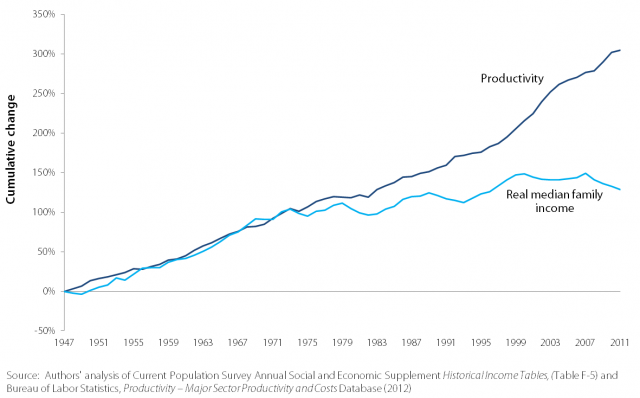
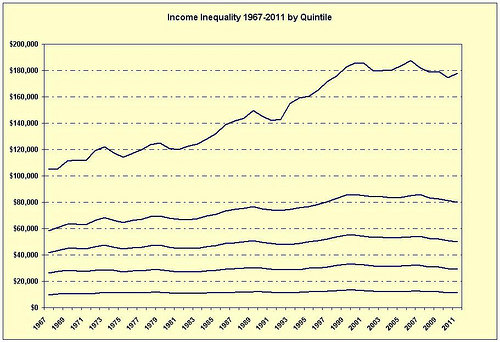
Here is the ever widening gap of economic disparity in the United States:
Biblical Counseling — Exposing the Darkness Disguised As Light
06 Feb 2015 Leave a comment
in Acts of the Ignoble, Antipathy, Child abuse, Childhood Development, Dishoner, Intellectual Dishonesty Tags: Bible, Biblical Counseling, bigotry, Christian fundamentalism, Christianity, Dangerous occupations, religious bigotry, religious intolerance
I’ve little to add to this wonderful post. It should be required reading (including its links) to all parents and expecting mothers:

Excerpt from Got Questions.org:
“Secular psychology is based on the ideas that man is basically good and that the answer to his problems lies within himself. The Bible paints a very different picture of man’s condition. Man is not “basically good”; he is “dead in trespasses and sins”(Ephesians 2:1), and the unregenerate heart is “deceitful and beyond all cure” (Jeremiah 17:9).
View original post 1,520 more words
Believe It or Not, the World is Becoming LESS Violent
31 Jan 2015 Leave a comment
in A path to a better world, empathy, evolution of the mind, Inclusiveness of Life, World Peace Tags: Benevolent Reciprocity, best of all possible worlds, Brotherhood, Do unto others as you would have them do unto you, empathy, End of War, enlightenment, human-rights, The Empathy Imperative, World Peace
CHILD’S PLAY: All Girl-Child Band – The Warning
26 Jan 2015 4 Comments
in A path to a better world, Childhood Development, Good Nurturing, Music Tags: biology, Brain devolopment, Brain research, Child's play, Early Childhood Development, Great Music, Neurology, Neuroscience, Talented little girls, The Warning, Victoria, Victoria Neuronotes
I just now came across this video on a wonderful friend’s blog post, which I am posting here. Victoria, owner of the blog, is deeply interested and well read on the subject of behavioral neuroscience, especially early childhood development. Give her a “like” and a “follow,” and read her posts.
Max T. Furr is author of The Empathy Imperative, a philosophical/spiritual novel.
Let’s Get Past The Ancient Chauvinism
21 Jan 2015 2 Comments
in Acts of the Ignoble, Atheism v Religion, compassion, empathy, evolution of the mind, Inclusiveness of Life, Meaning of life, Religious intolerance Tags: benevolence, better world, Bible, bigotry, family values, Religion in the public square, tolerance
As a matter of understanding and a blow for universal empathy between the genders, I reblog this video.
Ten types of women Christian men should not marry. This video/article was just brought to my attention. Thanks Tim.
View original post 154 more words
THE GUANTANAMO DIARY: A Profile of Courage Under a Depraved U.S. Administration
20 Jan 2015 Leave a comment
in Acts of the Ignoble, compassion, courage, empathy, Examples of Courage and Empathy, role model, The Meaning of Empathy Tags: Black Sites, Dick Cheney, empathy, G. W. Bush, Ignobility, Indifference, insensitivity, Islam, religious intolerance, shame on the nation, The Guantanamo Diary, Torture, torture camps, Treason, tyrannical government
Learn of the man with far more courage, honor, and empathy than the collective soul of a conservative nation:
Should there be Empathy for Terrorism?
08 Jan 2015 2 Comments
in A path to a better world, Acts of the Ignoble, compassion, empathy, Empathy and Religious Belief, Inclusiveness of Life, Malala Yousafzai, Religious intolerance, The Meaning of Empathy Tags: benevolence, better world, cartoons of Mohammad, Charlie Hebdo attack, Church and State, Establishment Clause, insults, Islam, John Stuart Mill, On Liberty, philosophy, religious freedom, The Empathy Imperative, The First Amendment, Thomas Jefferson, tolerance
Being an advocate of universal empathy and benevolent reciprocity, acts of sheer terror such as the Charlie Hebdo attack place me squarely on the horns of a dilemma, especially since I am opposed to the death penalty as well. So, since I do not shy away from cognitive dissonance, as I write this piece, I will attempt reconcile my seemingly opposing concepts. I turn to philosophy.
On one horn, I am a devotee of the John Stuart Mill School of Free Speech—a school of empathic thought that says, in Mill’s words:
If all mankind minus one, were of one opinion, and only one person were of the contrary opinion, mankind would be no more justified in silencing that one person, than he, if he had the power, would be justified in silencing mankind. –John Stuart Mill, On Liberty, Chapter 2 – Of the Liberty of Thought and Discussion.
Side note: It is clear to me that this mode of thought, in no small measure, influenced Jefferson and Madison when they crafted the Establishment Clause of the First Amendment, the intent of which is laid out in Jefferson’s Virginia Bill for Establishing Religious Freedom. And that intent is the very heart of a constitutionally limited, representative democracy (a republic). I no longer see our nation as such, however, but that is an argument for another time.
Indeed, as Mill wrote concerning the “tyranny of the majority”:
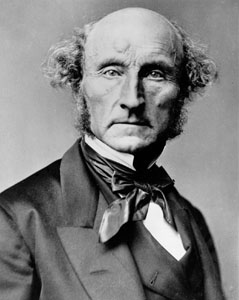
John Stuart Mill
Like other tyrannies, the tyranny of the majority was at first, and is still vulgarly, held in dread, chiefly as operating through the acts of the public authorities. But reflecting persons perceived that when society is itself the tyrant—society collectively, over the separate individuals who compose it—its means of tyrannizing (sic) are not restricted to the acts which it may do by the hands of its political functionaries. Society can and does execute its own mandates: and if it issues wrong mandates instead of right, or any mandates at all in things with which it ought not to meddle, it practices (sic) a social tyranny more formidable than many kinds of political oppression, since, though not usually upheld by such extreme penalties, it leaves fewer means of escape, penetrating much more deeply into the details of life, and enslaving the soul itself. Protection, therefore, against the tyranny of the magistrate is not enough: there needs protection also against the tyranny of the prevailing opinion and feeling; against the tendency of society to impose, by other means than civil penalties, its own ideas and practices as rules of conduct on those who dissent from them; to fetter the development, and, if possible, prevent the formation, of any individuality not in harmony with its ways, and compel all characters to fashion themselves upon the model of its own. There is a limit to the legitimate interference of collective opinion with individual independence: and to find that limit, and maintain it against encroachment, is as indispensable to a good condition of human affairs, as protection against political despotism. —John Stuart Mill, On liberty, chapter 1
Thus I have to say that Charlie Hebdo has, in my opinion, every right to lampoon fundamentalist Islam, bearing in mind that their parodies of Mohammad is not the root cause of the terrorist attack, but was a contributing factor.
On the other horn of my dilemma is the root cause of the Charlie Hebdo attack—that of the right of fundamentalist religions to preach and believe as they do—a religious teaching that encourages murder as revenge for perceived insults to Islam. Too, it is for the most part a mindset with which one cannot reason. This last point, of course, is the same for peaceful but still dangerous fundamentalist, religious beliefs of Western nations. If one is convinced that he will burn in an everlasting Hell if he does not abide by the doctrines he was taught to believe, how can anyone change his mind? Cannonballs of logic and reason will not dent his walls of dogma. But, has he the right to teach and build those walls for others?
This brings me back to Mill, who wrote:
First, if any opinion is compelled to silence, that opinion may, for aught we can certainly know, be true. To deny this is to assume our own infallibility.
Secondly, though the silenced opinion be an error, it may, and very commonly does, contain a portion of truth; and since the general or prevailing opinion on any subject is rarely or never the whole truth, it is only by the collision of adverse opinions, that the remainder of the truth has any chance of being supplied.
Thirdly, even if the received opinion be not only true, but the whole truth; unless it is suffered to be, and actually is, vigorously and earnestly contested, it will, by most of those who receive it, be held in the manner of a prejudice, with little comprehension or feeling of its rational grounds. And not only this, but, fourthly, the meaning of the doctrine itself will be in danger of being lost, or enfeebled, and deprived of its vital effect on the character and conduct: the dogma becoming a mere formal profession, inefficacious for good, but cumbering the ground, and preventing the growth of any real and heartfelt conviction, from reason or personal experience. —John Stuart Mill, On Liberty, Chapter 2 – Of the Liberty of Thought and Discussion.
Therefore, fundamentalist Islam does, indeed, have a right to teach its opinions, although Mill would not condone—nor would any person possessing even a molecule of humanity and reason—allowing it to act out its nefarious teachings.
The solution? By allowing radical and harmful ideas to be spoken, society, perceiving the danger, knows who to watch and to whom contrary opinions, especially those of empathy, must be conveyed. Still, there must be constraints, especially in fundamentalist Islam, to prevent harmful acts. If the individuals of the group are beyond reason, then society must protect itself, by any means necessary—although capture should be our primary concern.
However, terrorists who are captured should not be put to death, but imprisoned and detoxed, if possible, of their harmful concepts. If they cannot be detoxed, then they must remain in prison and be treated humanly.
This episode highlights why I promote the view that every individual should rid himself of all religious dogma, saving only the single concept of benevolent reciprocity: do unto others as you would have them do unto you. This goes for Western nations as well. Our primary goal, above all, should be the elimination of poverty and corporate/government greed–the ultimate medium for radicalism to grow.
I welcome your arguments and corrections if you find any.
Max T. Furr is author of The Empathy Imperative, a philosophical novel that takes a critical look at justice, love, and mercy, and written in the spirit of the BBC/WGBH Boston film production, God On Trial.
Based on
Let’s Have Empathy for Teachers, but Let’s Rejoice for Parents
06 Jan 2015 Leave a comment
in compassion, courage, empathy, The Meaning of Empathy Tags: empathy, family values, Humor, tolerance
Here is a slight deviation from seriousness (well, I reckon it’s serious for some).
I can add nothing to this hilarious clip!
Posted to YouTube by cheyenne Felicia.
Why I Think This World Should End – a video message by Prince Ea
04 Jan 2015 Leave a comment
in A path to a better world, compassion, courage, empathy, Examples of Courage and Empathy, Inclusiveness of Life, Malala Yousafzai, Meaning of life, The Matrix, The Meaning of Empathy Tags: Acts of Kindness, better world, courage, devastation, do unto others, enlightenment, Prince Ea, The Empathy Imperative, Why I Think This World Should End
I ran across this video just now and found that the message fit perfectly the theme of my blog. I invite all to listen closely all the way through. Comments will be appreciated.
I would only add that Prince Ea’s use of the word “love” in the video is synonymous with the word, “empathy.”
Empathy is the act of mentally projecting oneself into the mind of another and trying, as much as possible, to experience his life and environment as he sees and feels it. To understand his emotions, his hopes, and his constraints.
Empathy is much more than mere sympathy. It is brother/sisterhood with family, friends, and strangers. It is feeling for others as you would feel for your own young child. It is understanding the devastation that poverty, neglect, and indifference have on the world view of an impoverished child. What you would not want for your child, you would not want for all others. This is the concept to which Prince Ea points.
Does Life Have Meaning?
24 Dec 2014 4 Comments
in Causal Determinism, evolution of the mind, Meaning of life Tags: Benevolent Reciprocity, Bible, Brotherhood, determinism, eternity, evolutionary biology, example of causal determinism, excerpt, intellectual paralysis, Joseph Campbell, Laplace, Laplace's Demon, logic, Meaning of life, philosophy, Plato, the effect of its past and the cause of its future, The Empathy Imperative, universal empathy
Each of us has meaning and we bring it to life.
It is a waste to be asking the question when you are the answer.
― Joseph Campbell
This post might seem to be something of a deviation from my theme of universal empathy and benevolent reciprocity, but it is not. It is a revision to the response I gave, concerning Campbell’s quote, at Kendall F. Person’s blog recently and it reminded me that, although I have held the same concept for many years, I had never thought to reconcile it with my philosophy of causal determinism (all events in the universe, including our actions and thoughts, are determined, not from any deity, but from nature). But if causal determinism is true and we have no free will, then how do we “give” meaning to life?
The meaning I try to give is unconditional empathy and benevolent reciprocity. Looking back at the horrors of history, I think humanity is evolving ever so slowly toward a world of brotherhood and sisterhood, and I desire to help the process, yet it may be coming about involuntarily–despite my meager and often flawed efforts, or the efforts of anyone else.
Involuntarily? How so?
Campbell’s quote suggests that the meaning of life is entirely existential (from within each individual)–that there isn’t a meaning other than what we give it. I think this is necessarily so. Plato recognized the existentiality of true social justice somewhere around 400 BCE. Indeed, looking back at my own intellectual evolution, I can see the causal factors that brought me to the world view I hold today, and I am virtually convinced that I had no choice but to evolve as I have.
So, if causal determinism is true, then the meaning each of us give to our lives was determined from an incalculable number of intertwining causes and effects going back to the beginning of the universe, and possibly back into infinity past.
To make my point more lucid, I offer you another excerpt from The Empathy Imperative:
* * *
[Scene: Jeff Hale, professor of evolutionary biology, is trying desperately to suppress an onslaught of grief caused by news of the death of his estranged, fundamentalist father. He stands at his office window, staring out in search for distractions.]
His attention was drawn to a wind-blown sheet of paper, loosely crumpled, trapped in the hedge by the sidewalk. He mused at how it seemed to struggle to free itself.
It might be a page from a philosophy paper, a rough draft, or even a graded paper, possibly from one of my own students. Discarded thoughts, once regarded by their perpetrator as brilliantly original arguments, but found on deeper reflection to be groundless assertions—conjecture without foundation—a desecration of sound logic.
Jeff smiled and nodded approval. Even if it were so, failure is often a good thing. From every attempt to elucidate an argument, fail or not, a student learns and progresses.
The paper freed itself from its prickly captor. Jeff watched as it joined the swirling leaves tumbling off across the quad, its unwilled course set by the capricious wind.
Capricious? No, even the direction of the wind has a cause, as does the wind itself. And was there not a cause that impelled the student to crumple and toss the paper? Anger? Disinterest?—an attempt to cast away his regret for not having studied sufficiently?
The paper was going to bounce across the quad long before the student crumpled it, long before he adorned it with his thoughts, long before the paper itself was made, and even long before the student was born. From the beginning of the universe, an unbroken chain of countless, intertwining events merged to cause that crumpled sheet of paper to tumble across the quad.
It reminded Jeff of Laplace’s Demon. Pierre-Simon Laplace penned the most cogent explanation of causal determinism, a concept that suggests the current state of the universe and everything therein is “the effect of its past and the cause of its future.”
He supposed that if there could be an intellect so immense as to know all forces of nature in the universe at a single instant, know the positions and trajectories of all particles, and could analyze that data, to such an intellect there would be no difference between the future and the past.
My standing here gazing out this window, every whip and whirl of wind, every deflected motion of the tumbling paper, indeed, every thought in my head and in everyone else’s head would be known to such an intellect from eternity past.
It’s the very definition of unqualified omniscience. But what an eternally boring state of existence such a being would have. What an unending, intellectual hell it would be.
Jeff grinned. How could such a being possess humor? It would know the punch line of all jokes in the universe for all time. No humor there. It also would be devoid of curiosity. It would be indifferent to all things.
The net effect on such a being would amount to eternal, intellectual paralysis. Is that why the god of the Old Testament was so angry and devoid of humor? He spent all of his prior existence trying to do something he would not know he would do before he did it? But, then, were the stories of the Old Testament even remotely true, he didn’t act as though he were omniscient.
Still, there is no need of a god or a demon. Take them out of the mix—remove the intelligence factor altogether—and you have determinism: cause and effect.
Thoughts of omniscience brought Jeff back to his father, who zealously believed that his god was omniscient and knew the thoughts of every soul on earth at every moment, even before the thinkers thought them, and even before the earth came into existence.
* * *
I welcome all points of view on this.
Max T. Furr is author of The Empathy Imperative, a philosophical novel of Justice, mercy, and love, written in the spirit of the BBC/WGBH Boston production, God On Trial.
ANSWERS IN GENESIS: A Profile in Parasitism (AN UPDATE)
22 Dec 2014 Leave a comment
in Acts of the Ignoble, empathy, Empathy and Religious Belief, Inclusiveness of Life, Religious intolerance, The Meaning of Empathy Tags: AiG, Americans United for Separation of Church and State, Ark Encounters, Ark Park, benevolence, best of all possible worlds, better world, Bible, Brotherhood, Christianity, Church and State, creationism, do unto others, Establishment Clause, evangelical, First Amendment, Freedom of Religion Clause, Kentucky, Noah's Ark, Sectarian Religion, Thomas Jefferson, Virginia act for Establishing Religious Freedom
—-Updated from my original post, Answers in Genesis: A Profile in Parasitism.—-
The State of Kentucky has decided to extend no further tax incentives to Ark Encounters, a Christian fundamentalist theme park.

The Mask of Deception
Now, I understand that some folks might think the following is a continuing attack against Christianity in general and Answers in Genesis (AiG) in particular. On the contrary. I am only suggesting how I believe empathy could be applied to this situation such that the solution is in the best interest of everyone. That is, by the way, the purpose of the religion clauses of the First Amendment.
Fairness requires empathy, and empathy can only be derived from within.
First, with regard to AiG, note that no one is making any attempt to shut down its right to purchase property and have a theme park. First Amendment watchdog groups demand only that governments–federal, state and local–represent all of its citizens, without regard to their religious beliefs, their political opinions, or their financial standing. All working citizens pay taxes, thus, all citizens must have free access to commerce and must not be forced to subsidise sectarian religion.
Secondly, in the United States–as most of you know–all religions are to be treated equally under constitutional law. The only way this can be accomplished is for the government to remain neutral in matters of religion, (i.e., it cannot make laws respecting anyone’s religion).
When the courts attend matters of church and state separation, they reference the intent of the Establishment and Free Exercise clauses of the First Amendment, which may be found in Jefferson’s Virginia Act for Establishing Religious Freedom. Here is the excerpt pertinent to the AiG case.
Well aware that the opinions and belief of men depend not on their own will, but follow involuntarily the evidence proposed to their minds; that Almighty God hath created the mind free, and manifested his supreme will that free it shall remain by making it altogether insusceptible of restraint; that all attempts to influence it by temporal punishments, or burthens, or by civil incapacitations, tend only to beget habits of hypocrisy and meanness, and are a departure from the plan of the holy author of our religion, who being lord both of body and mind, yet chose not to propagate it by coercions on either, as was in his Almighty power to do, but to extend it by its influence on reason alone; that the impious presumption of legislators and rulers, civil as well as ecclesiastical, who, being themselves but fallible and uninspired men, have assumed dominion over the faith of others, setting up their own opinions and modes of thinking as the only true and infallible, and as such endeavoring to impose them on others, hath established and maintained false religions over the greatest part of the world and through all time: That to compel a man to furnish contributions of money for the propagation of opinions which he disbelieves and abhors, is sinful and tyrannical . . . [note that Jefferson was a Deist, not a Christian]
How could this be more empathetic and fair to all citizens?
Now, with regard to AIG’s ongoing efforts to have the taxpayers of Kentucky pony up 10s of million$ more in tax breaks for its restrictive, fundamentalist Ark Encounters theme park, after Americans United for Separation of Church and State (AU) reminded Kentucky lawmakers, many times, that they were elected to serve all the people and not just fundamentalist Christians, the State backed out of further tax incentives for the park. AiG is now resorting to revenge attacks for being forced to abide by the Constitution.
From AU:
Answers in Genesis (AiG), a creationist Christian ministry, had applied for a 25 percent sales tax rebate through the Kentucky Tourism, Arts and Heritage Cabinet for Ark Encounter, a theme park that will feature a 510-foot replica of Noah’s Ark. The application received preliminary approval, and since the project is expected to cost $73 million, final approval would have cost the state up to $18 million in sales tax revenue.
But the Ark Park sailed into stormy seas in August when Americans United informed the tourism cabinet that AiG had posted online an opening for a computer-assisted design technician to work at Ark Encounter. That job post has since been removed, but in the August description, AiG said applicants must submit a “[c]reation belief statement,” as well as “[c]onfirmation of [their] agreement with the AiG Statement of Faith.”
That “statement of faith” required potential AiG employees to affirm their belief that homosexuality is a sin on par with bestiality and incest, that the earth is only 6,000 years old and that the Bible is literally true. Anyone who doesn’t agree with those statements won’t be considered for the job. (Read more here.)
According to AiG’s own website, “The purpose of the Ark Encounter park is to point people to the only means of salvation from sin, the Lord Jesus Christ, who also is the only God-appointed way to escape eternal destruction.”
But after receiving word of the tax-break cutoff, according to AU, “AiG . . . said earlier this week that it would run 16 billboards throughout the state promoting Ark Encounter and attacking ‘intolerant’ groups like AU. AiG also said it bought a 15-second digital video display that will run in New York City’s Times Square.”
AiG feels that it has been attacked unfairly and is being denied its “right” to tax dollars from non-fundamentalist Christian people–the same folks they would bar from employment at the park, no matter what their qualifications.
I have to wonder, What would the politicians of Kentucky, who want to continue the tax breaks, do if a group of Muslim citizens wanted the State to give them tax incentives to establish a park dedicated to Islam? Would you think that the folks at AiG would object?
How do you feel about this? Does AiG have a right to tax dollars? Should all religions have that same right?
The Key Ingredient for Empathy is Understanding: Do Atheists Have Faith?
11 Dec 2014 Leave a comment
in A path to a better world, Atheism v Religion, empathy, Science v Religion, The Matrix Tags: argumentative fallacies, benevolence, better world, Christianity, Church and State, Creationism and Evolution, empathy, equivocation, faith, fallacies, Nature of faith, The Empathy Imperative, The nature of justice, What is equivocation
Do Atheists Have Faith?
December 1, 2014 by 357 Comments
 If I had a nickel for every time someone told me that atheists have faith, too, I could quit my day job. Okay, so maybe that’s an exaggeration but I probably could at least afford a pretty decent steak dinner. It’s very frustrating to hear and it’s not for the reason the person saying it thinks it is. This assertion doesn’t irritate me because it’s clever or insightful; it irritates me because it’s nowhere near as clever or as insightful as it sounds. In fact, it’s a logical fallacy called equivocation. I’ll explain what I mean by that in a second, but ultimately I’m not interested in talking about argumentation (well, maybe I am a little bit). I’m more interested in explaining how faith and reason represent two very different approaches to perceiving the world, and how they operate on very different principles.
Equivocation happens when . . .
read more at Do Atheists Have Faith?.
_________________________________________________________________________
— Max T. Furr is author of The Empathy Imperative, a philosophical novel exploring the nature of biblical, Divine Justice–as opposed to true justice. Was Descartes wrong and God was a deceiver, after all? What would the world be like if empathy, not self interest, were our primary motivating force?

 An Evil Demigod in the White House
Recent Comments